
Confessions of A Married Feminist
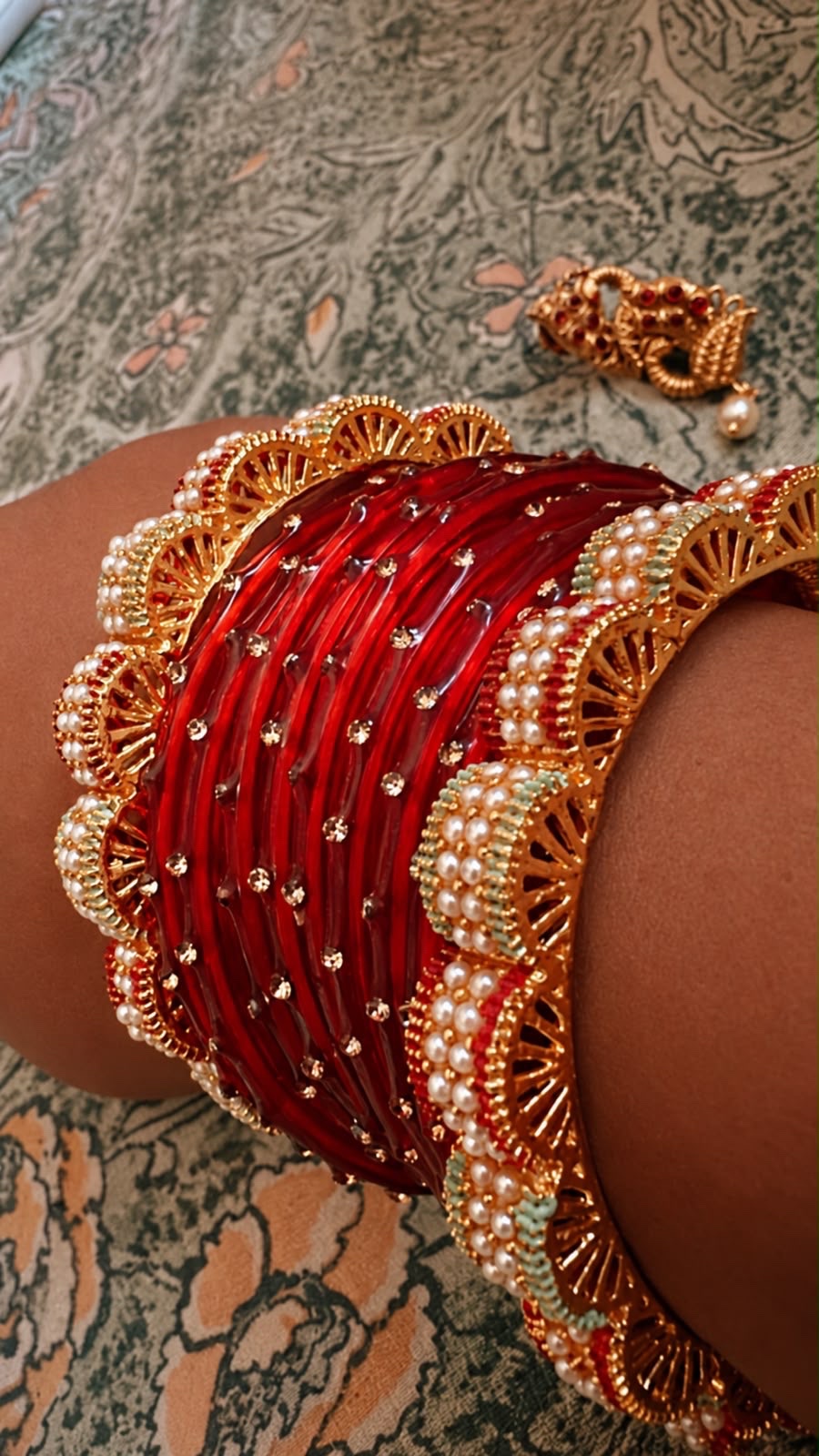
Yesterday, I celebrated Teej. I slipped into a sari, its fabric heavy yet comforting, and stacked bangles that clinked every time I moved my hands. My hair smelled faintly of jasmine, and I pressed sindoor carefully into the parting of my hair. Even as I smiled and swayed to the rhythm of the songs, something unsettled me.
Around me, women laughed and sang. Plates of sweets were passed from one hand to another, their sugary taste clinging to the air. For a while, it felt festive, warm, and familiar.
Beneath the joy, questions rose: What am I really celebrating?
Traditionally, Teej is associated with the story of Goddess Parvati and her long devotion and penance before her union with Lord Shiva. Over time, that story came to shape rituals in which married women fasted and prayed for the wellbeing and longevity of their husbands, while unmarried women prayed for a suitable partner. Today, the festival has taken on many meanings, including celebration, sisterhood and a gathering of women. But I cannot completely separate what it has become from what it has historically asked of women.
The history of Teej, like many other rituals, is rooted in patriarchy. For generations, women and their bodies became the centre of virtue and tradition. A woman’s value was measured by her loyalty, her fasting, and her ability to endure quietly. Suffering was seen as sacred, while choice and agency were taken away. The stories we inherited praised devotion, but rarely freedom.
These are not just abstract stories to me, they live in the corners of my own memory, in the things I have witnessed and the things I have been told since childhood. I see the smoke of women burnt alive on their husbands’ pyres, not as a distant historical fact but as something whispered in family stories, as if it were once normal for a woman’s life to end the moment her husband’s did. I picture the face of a widow, still a child, sometimes only nine years old, dressed in plain white, and stripped of colour, laughter, and her very childhood.
I hear the cries of daughters beaten for dowries they could never bring, echoes that remind me of the fear many girls carry into their marriages. I imagine the women cast out and hidden away in elite houses and slums alike, and I wonder how many of them once sat in festivals like Teej, also singing and smiling, before being discarded by the same culture that demanded their devotion.
And when I think of wombs being blamed for birthing daughters, I know it is not just something that happened long ago. I have seen the way people still whisper when a girl is born instead of a boy, as if a woman’s worth is measured only by the son she can deliver. I have seen acid-scarred faces in the news and felt a deep grief that these women are part of the same culture I am told to protect.
What strikes me most is how deliberately women were denied the right to even question this. For centuries, women were kept from education, denied the chance to read or interpret the very scriptures that were used to define their lives. Men told them what was sacred, what was right, what their dharma was supposed to be, and they had no language, no access, no permission to say otherwise. Their silence was not ignorance. Their silence was survival.
But unlike the women before me, I can read, think, and push back. I can ask the questions they never had the words for. I can join a festival like Teej and decide for myself how to take part. Wearing a green saree this year felt like a small way to reclaim something, a way to honor tradition without losing myself. I can choose which parts of culture to keep, and which to let go.
When I think of the women before me, denied education, denied dignity, denied choice, I know their silence was never consent. It was survival. Today, I carry their stories, but I also carry the freedom they never had. To waste that by staying silent would be the real betrayal.
With this privilege comes responsibility. If I can see these chains for what they are, I cannot pretend they are something beautiful. If I can call out patriarchy, I cannot keep calling it culture.
If culture once had the power to confine women, it can also have the power to free us, if we are willing to change it.
And perhaps that is also what makes this harder. Teej today is not only the tradition I question. I also see women turning it into something of their own. I see friendship, laughter, dressing up for ourselves, dancing together, and creating a space where women take centre stage. In these moments, the festival feels less about how a woman serves her marriage and more about women celebrating one another. There is something hopeful in that reclamation.
But perhaps reclamation itself is complicated. Can we change the meaning of a tradition simply by choosing to practise it differently? Can something born within patriarchal expectations become empowering when women begin defining it for themselves? Or does some part of the old meaning remain, quietly travelling with us even when we believe we have left it behind?
That is the juxtaposition I cannot quite resolve.
I often find myself caught in this dichotomy. Do I truly want to celebrate Teej, or am I celebrating because patriarchy has passed down to me the idea that being a good wife or a good daughter-in-law means following these rituals without question? Is my participation a matter of consent, or is it the subtle inheritance of centuries of conditioning?
While I navigate these questions, this is what I feel: for now, it feels like I am choosing to celebrate. But that choice weighs heavily on me. I know I cannot separate joy from unease, pride from guilt. This year, I wore the saree, joined the songs, and fasted. Next year, I may choose differently. Perhaps I will find a way to reclaim it more fully, or perhaps I will step away altogether.
What I know for certain is that I cannot blindly defend culture as it is. The culture worth protecting is not the one that sanctifies our suffering, but the one that honors our lives. It is not the culture that silences us, but the one that lets us speak and live freely.
For now, I continue in this space of conflict, of questioning and redefining. And maybe that is what it means to love culture deeply; enough to ask what should be carried forward and what must finally be left behind.
Questioning a tradition does not always mean rejecting it. Sometimes, it simply means giving ourselves the space to understand what we truly choose and what we may have inherited without ever being asked. If this article made you reflect on your own relationship with culture, gender roles, marriage, or the expectations you carry as a woman, iDare can offer a safe, non judgmental and inclusive space to explore those questions. Through therapy and counselling, you can unpack what belongs to you, what comes from conditioning, and what you may want to reclaim, redefine, or leave behind.