
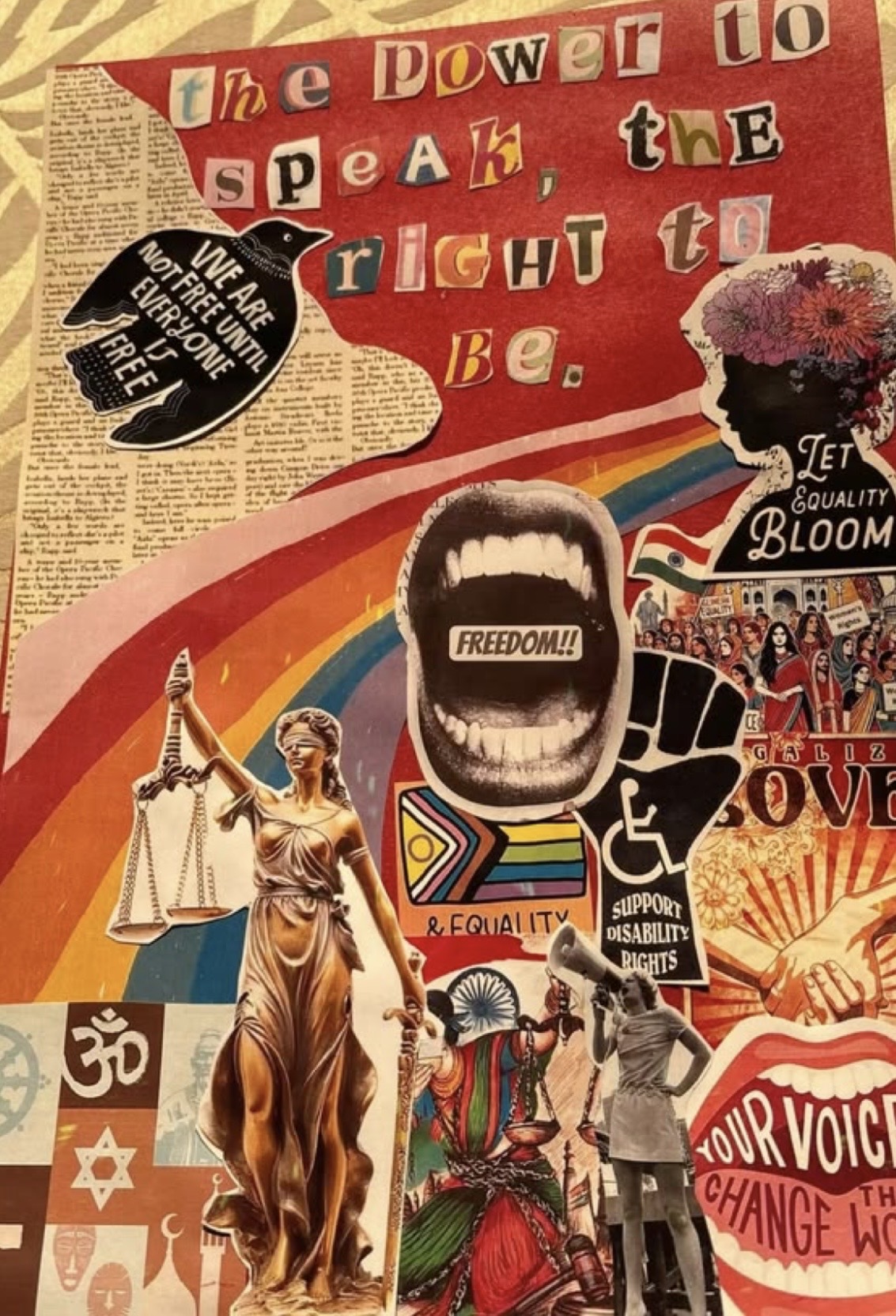
If Nobody Could See You Do It
Calling out publicly can sometimes be more about showing people where we stand than changing what happened. We see a terrible headline, share it on our story and add how disgusted we are. By evening, the story disappears, and so does the question of what happens next.
I have done this too. Sometimes sharing is the first useful thing we can do. But how often do we mistake being seen caring for actually being involved?
Social media has made our politics part of our personal brand. The books we read, the causes in our bio, the people we call out: they tell others who we are. The trouble starts when visibility becomes the goal.
Calling someone out has a political purpose. When institutions ignore private complaints, going public can bring witnesses, build pressure and help others recognise a pattern. Sara Ahmed writes about how institutions make complaints so exhausting that the person complaining becomes “the problem.” Sometimes the post is the last door left.
This piece is aimed at those of us who have safer routes and still choose the spotlight first.
A callout can become a performance. We stop asking, “What needs to change?” and start asking, “Did everyone see that I condemned it?” The person harmed becomes a story that proves our politics. Everyone else gets to feel useful because we chose the correct side.
A public takedown can make us feel powerful without asking us to give up any power.
The cost of speaking is never shared equally. A savarna man with a large following might lose a few followers. A Dalit woman, a Muslim woman or a trans person naming harm can face doxxing, job loss and legal or rape threats.
Anger from the privileged gets read as principle. Anger from people with less power gets called divisive or “performative.” Sometimes that word simply tells angry people to be quiet. Gopal Guru talks about how the marginalised are expected to supply the pain while others supply the theory. Online, we take someone’s experience, add commentary and collect the credit.
It is easy to have the right language online and still laugh when a friend says something casteist. To post about consent and stay silent when someone in our circle crosses a boundary. To praise workers and treat those working for us as invisible. Politics gets harder when challenging someone could cost us a relationship, an opportunity or our comfort.
An Instagram post can spread information, raise money and help people organise. However, reach is not repair. Views do not tell us whether a survivor was supported or a workplace changed. Bilkis Bano’s fight involved online outrage, but also years of legal work that led the Supreme Court to quash the convicts’ early release in 2024.
A post can open a door. It cannot walk through it for us.
Platforms reward visible outrage: it gets likes and feels like action. Research on moral licensing suggests that doing one good-feeling thing can reduce our motivation to do the harder one. The pull toward performing is partly built into the space. Knowing that helps us catch ourselves.
Meanwhile, the person at the centre rarely gets asked what they want. Some survivors want public attention. Others want quiet, safety and time. A viral post can complicate a legal case or increase risk. Before amplifying, ask: did the person ask for this? What do they need from me now?
Often, the answer is practical. Somewhere safe to stay. Legal help. Someone beside them at a police station. Time off work. A therapist who understands caste and gender. Money that keeps arriving after the trend ends.
That might mean donating regularly, attending meetings nobody photographs, helping a colleague document a complaint or challenging your family. Reading beyond a carousel. Sharing contacts, time and opportunities. Following people doing the work instead of turning their struggle into content.
Ambedkar gave us a map: educate, agitate, organise. Much of our online life sits in agitation. Education and organising help sustain change.
It also means asking more than “who deserves punishment?” Mia Mingus and others in transformative justice ask what would prevent harm from recurring and what the person harmed needs to heal. Maybe a call-out wouldn’t automatically lead to accountability, but might make the perpetrator defensive and polarise them further. In these cases, Loretta Ross’s “calling in” actually leaves room for change. It may not be right for every situation, especially where someone has ongoing power over another person. But accountability can mean more than a public verdict.
We must also be willing to be corrected. If our politics depends on always looking like the good person, it falls apart when someone says we caused harm.
Silence often protects the powerful. We need to know what we want a callout to do, who bears its cost and what we will do after it stops circulating.
Before posting, ask: who is this for? Who carries the risk? What will I be doing in month two, when nobody is watching?
If our activism never interrupts our comfort, relationships, money or routines, what exactly is it changing?
Do we want accountability, or an audience for our outrage?
Because if our politics only costs us a story post, someone else is still paying the price.
Image Credits: Self