
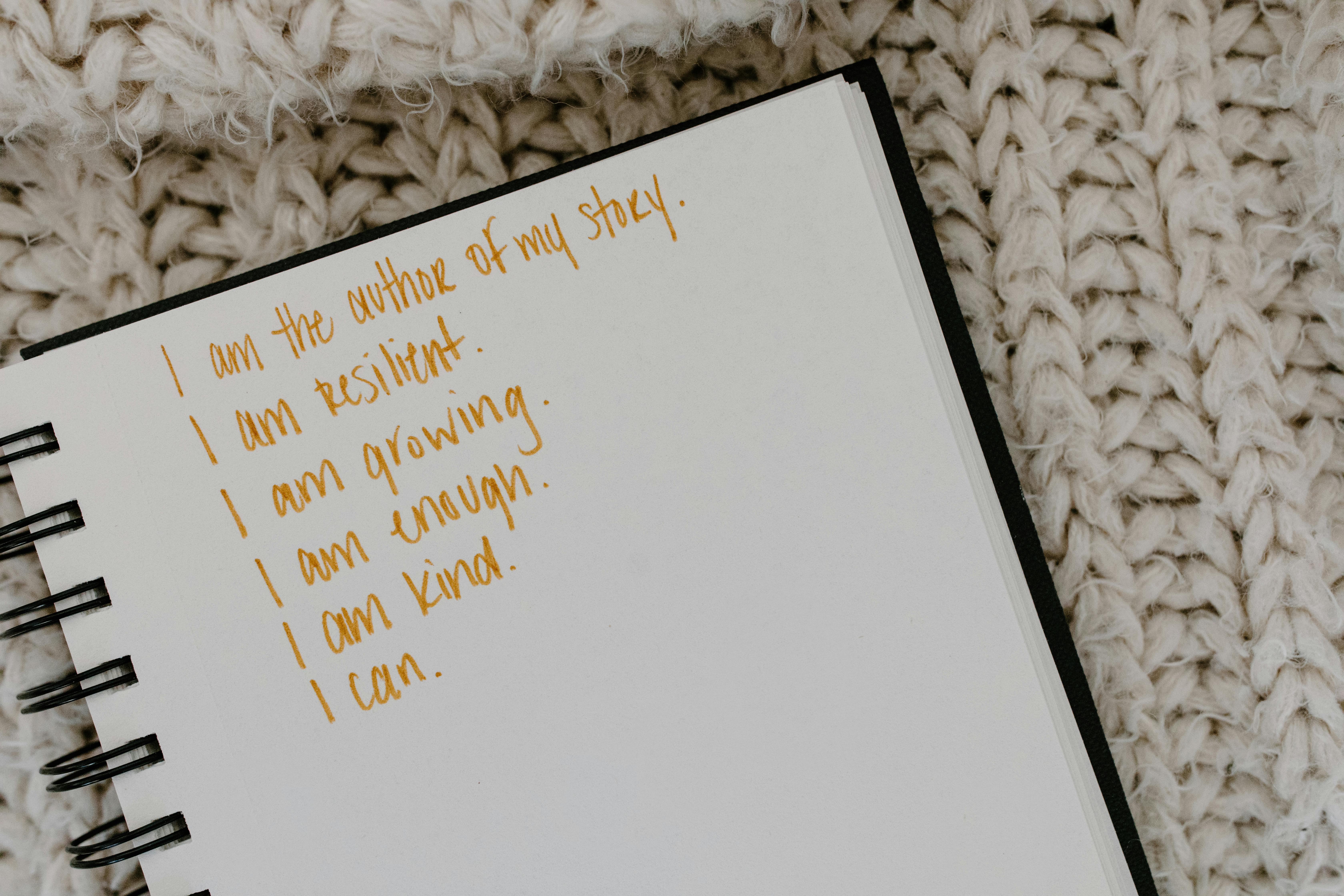
Let’s try again
Honestly, it took me a long time to convince myself to write about journaling (I actually wrote, write about journaling). It is a practice that didn't work for me for a long time. Every time I stared at the blank notebook, I felt as if the pages would never turn; it was just there, lying with its pristine emptiness. I was convinced it was not for me, or I was doing it wrong, because I could see it was helping my clients, friends, colleagues, everyone except me. I sat there, pen in my hand, feeling frustrated and wondering why this simple act seemed so profound for others yet so elusive for myself.
The only thing that finally got me writing about it is a recent feedback shared by a client, someone who found the prompts shared in our session helpful. She had written journaling off as “a failed attempt”, so this was like shooting an arrow in the dark just to see if it sticks this time, and it did. After a few simple guided prompts were shared in the session, she was finally able to unlock parts of herself to be able to put the emotions down.
What started as a reluctant thing led to a concrete shift. This is exactly the kind of change many guided journaling prompts produce. Structured and expressive writing helps people organise thoughts and emotions into cohesive narratives. It helps increase insight and self-compassion, and multiple times has reduced anxiety, improved mood, and shown significant improvements.
I had to see if it was going to be so merciful to me, too, and finally, we got there. Am I a big fan of it now? Not always! I still have certain tools I’d rather use, but I feel like a developer who finally cracked the code.
As most of you might already know, at its core, journaling is putting your thoughts, feelings, and experiences into words. Writing is supposed to help express, and by doing so, also helps us feel lighter or clearer in the head, but it doesn't, unfortunately, always work like that for everyone.
If you write “I’m stressed” every day, then you will walk away with the deep insight that you are indeed very stressed. Our 12-year-old selves might still think of journaling as “Dear diary, everything is chaos, send help”, though for it to be a thoughtful practice, sometimes having prompts can help. For instance, some primary prompts we could start with can look like so:
Prompts are tailored questions or statements that focus on a particular issue and ask s you to reflect and answer. For example, gratitude! Prompts for gratitude might ask you to name one thing you are grateful for this past week. So instead of free-style writing everything that comes to your mind, you are answering a specific question, which also helps you connect with yourself and reflect. with connecting to yourself and reflection.
1. What’s the one thing on my mind right now, and what does it need from me?
2. What emotion is closest to the surface today and how can I honour it?
3. What’s the one thing I can handle better today than I would have a year ago?
4. What’s something I wish someone could tell me right now, and can I tell it to myself?
5. What is one small choice I can make today that would make things even 1% easier?
Now, prompts brought me a different kind of pain. I thought I’d experiment with this with my mother after my client shared feedback. I gave her some questions on self-care and asked her to take her time with it and to make a mental note of what comes up for her. Surprise surprise! My mother finished my 5 questions in less than a minute, and do you want to know what thoughts or emotions came up for her? A big, fat nothing.
I thought I’d framed the prompts wrong at first, but decided to go ahead and use them once more on my lab rat here. When I asked my mother these questions instead, she still answered the same way, and then I backed them up with why, what, when, and how. This, I saw, pushed her into reflection, to think back to something, to think more deeply on it. The structure of the prompts, what it focuses on, and how deeply it takes you, these are things I learned, helped make the process more meaningful.
Please do not attack me (all forms of media are scary these days), for I do not mean to imply that free-style writing or other forms of journaling are not effective. I have seen it work wonders in my sessions and outside for some, too. We are talking of specific prompts prompts specifically for people who may not have benefited from these other styles of journaling (there are multiple, yes). Or if you have not had the opportunity to explore these other styles, then and if you are as rigid as I am, maybe you do not want to explore them.
These prompts may help connect dots and trace patterns, connect more to yourself and your emotions, and clear out the noise, though not every single attempt has to end in an Aha moment. If it helps slow your breathing, sigh, yawn, or cry, these are your signs that it has had some impact on you.
So, from now on, every month we will be putting out a few prompts on specific topics. Feel free to dive in for anything that resonates with you. Pay attention to the care reminders before you begin, and if you would like to discuss them, we (therapists at iDare) are here. Did you really think we wouldn't try to market ourselves?
Here’s to pages that hold what your mind may be tired of carrying!
Image Credits: Pexels