
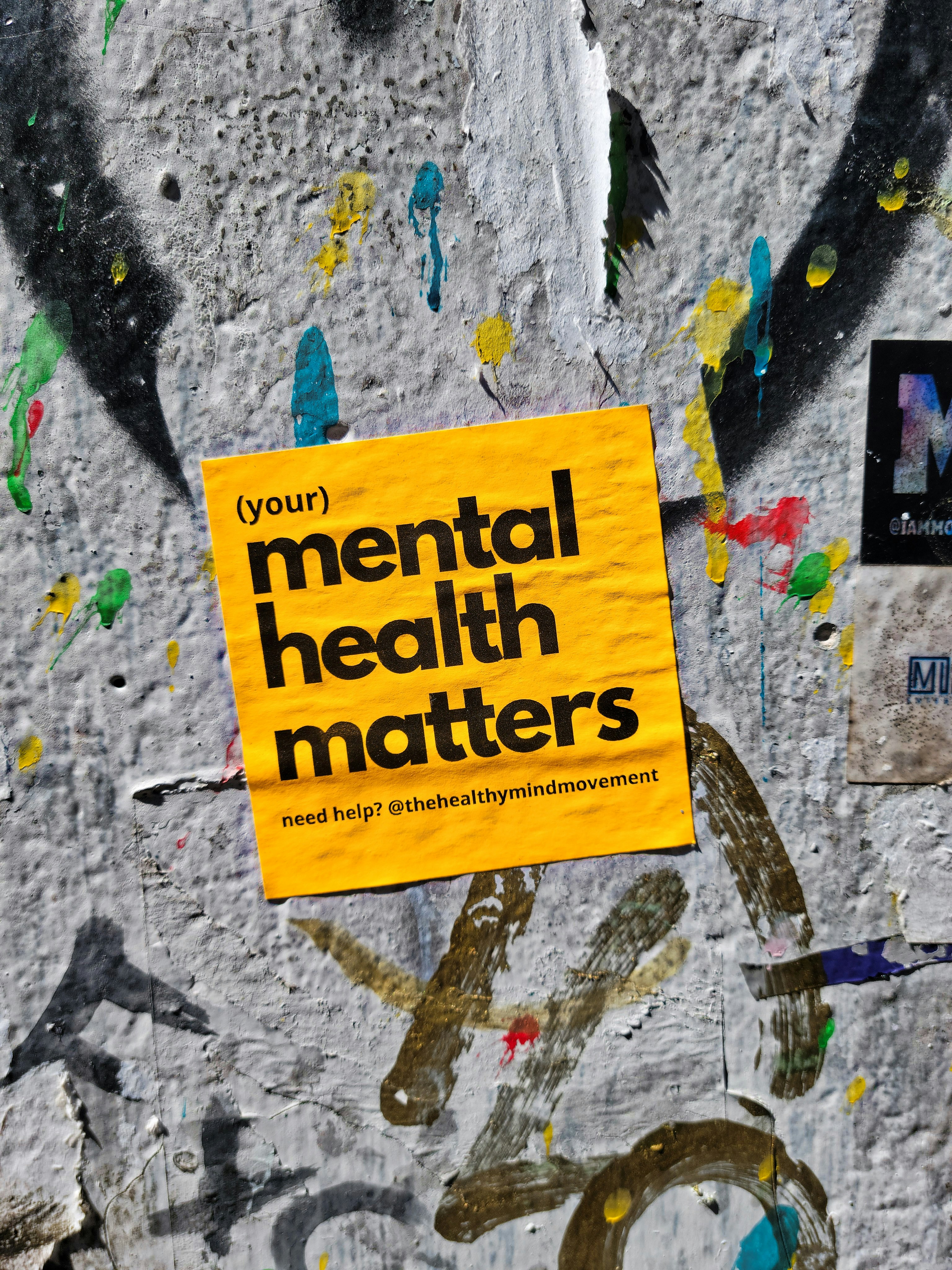
Here Is Why Real Voices Must Shape Mental Health Care in India
World Mental Health Awareness WEEK - A Note from iDare
A note from Vaamaa:
“Mental health is never shaped by the mind alone. It is shaped by power, gender, caste, class, religion, sexuality, disability, family, work and the freedom a person has, or does not have, to make choices about their own life.
We cannot keep asking people to become more resilient without asking what they are being forced to survive. We cannot recommend self-care to people who need community care and belonging. We cannot teach women to manage anxiety while ignoring the unpaid labour, control, violence and impossible standards producing it. We cannot tell young people to cope better while leaving academic pressure and uncertainty untouched. We cannot ask survivors of abuse to heal in isolation while the unjust systems that enabled their trauma remain unchallenged. And we cannot celebrate someone for being “strong” when strength was the only option society allowed them.
For too long, mental health systems have decided what healing should look like before listening to the people seeking it. Lived experience changes that balance of power. It reminds us that people are not merely recipients of care. They are experts in the realities they have survived, the cultures they inhabit and the support they need.
As a founder, I believe care must do more than help people function within unjust systems. It must also give them the language to question those systems, recognise what has harmed them and imagine a life beyond simply enduring it. Listening to lived experience is not inclusion for the sake of appearance. It is how we build mental health care that is more ethical, more accountable and capable of creating real change.”
Every year on 10 October, World Mental Health Day gives us a chance to truly ask a simple but powerful question:
Whose voices are we really listening to when we talk about mental health?
What if the most important expert in the room is the one who has never been invited to speak?
On 10 October every year, the world pauses for World Mental Health Day. Campaigns launch, statistics are shared, and carefully worded statements circulate. Yet beneath the noise sits a more uncomfortable truth: the people who actually live with anxiety, depression, trauma, burnout, or the slow weight of emotional pain are still too often treated as subjects rather than sources of insight.
This year’s theme, Lived Experiences Heard: Real Voices, Real Change, does not simply ask us to listen more carefully. It challenges the entire architecture of how mental health care has traditionally been designed. It asks whether we are prepared to let real stories reshape systems that have long preferred neat categories over complex human realities.
At iDare, this question is not abstract. It is the foundation of how we work.
What Is the Scale of What We Are Actually Facing
Recent data makes the need for change impossible to ignore.
Nearly 1.2 billion people worldwide live with a mental disorder, almost double the number recorded in 1990.
Mental disorders are now the leading cause of years lived with disability globally.
In India, the picture is equally stark. Student self-harm exceeds 13,000 every year. A 2025 multi-university study found nearly 60% of college students showing moderate-to-high depression.
Tele-MANAS, the national mental health helpline, has already handled more than 34 lakh calls since its launch. The treatment gap for mental disorders still ranges between 70% and 92%.
These are not abstract figures. They are late-night voice notes never sent, conversations abandoned mid-sentence, and lives lived under the weight of invisible expectations. The data tells us the scale. Only lived experience tells us the texture.
When Systems Speak Louder Than Stories
For years, mental health systems have been designed like buildings without windows, functional, measured, but largely closed to the light of real human stories. Clinical language often flattens pain into categories. Policy language turns people into target populations. Media coverage swings between sensationalism and silence.
The result is a dangerous distance. We begin to speak about people rather than with them. We inherit opinions instead of examining them. We prefer certainty over complexity because complexity demands something harder which is the willingness to sit with discomfort without rushing to tidy conclusions.
This is not just an institutional failure. It is a deeply human one. We are wired to seek social consensus and to trust the narratives that feel familiar. When those narratives exclude certain voices, women navigating family systems, young people dealing with academic pressure, survivors of emotional or physical abuse, men socialised into silence our empathy becomes selective. Selective empathy is not empathy at all. It is preference dressed as principle.
What iDare Actually Does
At iDare, we built our work on a deliberately different premise. We are India’s first 360-degree personal impact platform because we refused to accept that support should remain fragmented, expensive, or clinically cold. Therapy, free emotional support, abuse counselling, legal guidance, life coaching, and workshops sit under one roof not as separate services, but as connected pathways.
You can start with free emotional support through chat or call if you simply need someone to listen. You can move into structured therapy with trauma-informed professionals for anxiety, depression, relationship issues, trauma, parenting challenges, or life transitions.
We offer specialised support for children, couples, and adults. We also run workshops in schools, colleges, and workplaces that help people recognise unhealthy patterns early.
Our approach is deliberately intersectional and culturally rooted. Support is available in multiple Indian languages. Sessions are designed to feel human rather than clinical. And we keep affordability front and centre because mental health care should not be a luxury.
The most powerful moments in our work rarely look dramatic. They look like someone finally saying, I didn’t know I was allowed to feel this. They look like a young woman recognising a pattern she inherited without ever naming it. They look like a parent learning how to hold space for a child without collapsing into guilt or control.
Lived experience is not a soft addition to care. It is the foundation. Trauma-informed, culturally rooted support works because it treats the person in front of us as the primary source of knowledge about their own life. When people feel heard without being fixed, something shifts. The shame loosens. The isolation thins. The possibility of change becomes real.
What Uncomfortable Questions Should We Keep Asking
Who benefits when certain stories are amplified and others remain invisible?
What happens to a society that celebrates resilience while refusing to examine the conditions that demand it?
How many of our definitions of “strength,” “normal,” and “success” were simply handed down rather than chosen?
These are not rhetorical questions, they sit at the heart of this year’s World Mental Health Day theme.
Real change does not begin with another awareness campaign. It begins when systems and the people who design them become willing to be reshaped by the voices they have historically kept at the edges. It begins when listening is no longer an act of charity but an act of intellectual and moral honesty.
Why Lived Experience Matters
When people feel heard without judgement, something shifts. They stop feeling broken and start feeling understood. Research consistently shows that trauma-informed, person-centred care improves engagement and outcomes.
At iDare we see this every day in the returning users who stay for ongoing support, in the breakthroughs that happen when someone finally feels safe enough to speak, and in the growing number of people who move from crisis to steady growth.
Lived experience also teaches us what the system often misses. It shows us that mental health is not only about diagnosis. It is about the weight of family expectations, the exhaustion of hybrid work, the lingering effects of emotional or physical abuse, and the courage it takes to ask for help in a culture that still values silence.
This World Mental Health Day, we invite you to do more than just share a post. Listen to the stories around you, including your own. If you need a safe place to begin, we are here.
Reach out to iDare’s mental health experts and professionals for dedicated mental health care. Whether you need a listening ear, structured therapy, or guidance through a difficult chapter, support is available when you are ready.
Real change begins when real voices are heard. Let’s keep making space for them every day, not just on 10 October.
Image Credits: Pexels